AI Job Replacement: Defining Human Boundaries in the Age of Artificial Intelligence
AI technology is rapidly advancing, leading to scenarios where AI begins to take over human jobs. For Mr. Zhou, a 35-year-old former AI model quality inspection supervisor at a fintech company, this shift felt like a nightmare. After being demoted and having his salary cut from 25,000 to 15,000 yuan, he was ultimately terminated when negotiations failed. Following a labor arbitration and court trials, Mr. Zhou’s claims were upheld. The Hangzhou Intermediate People’s Court ruled that the company’s termination of his contract due to AI cost advantages did not constitute a significant change in objective circumstances that would justify the termination of the labor contract. The company was ordered to pay him over 260,000 yuan in compensation.

What types of jobs are being replaced by AI, and why does Mr. Zhou’s experience resonate with many? Clearly, in the tide of the AI era, the protection of workers’ rights faces new challenges.
Mr. Zhou, who previously verified and ensured the accuracy of AI-generated responses, was informed that his role could be replaced by AI due to technological upgrades. His lawyer, Jiang Xiaotong, argued that this position required knowledge of AI, finance, and project management, and that the company’s justification for layoffs was vague. Just how far has AI impacted jobs, and should this position be entirely replaced?
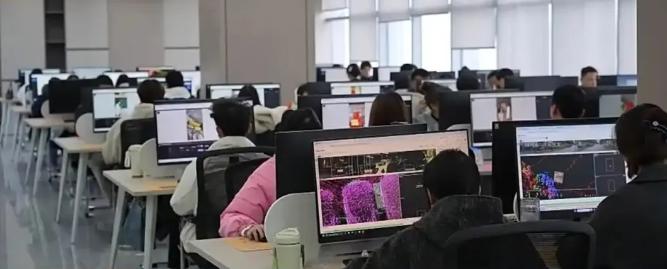
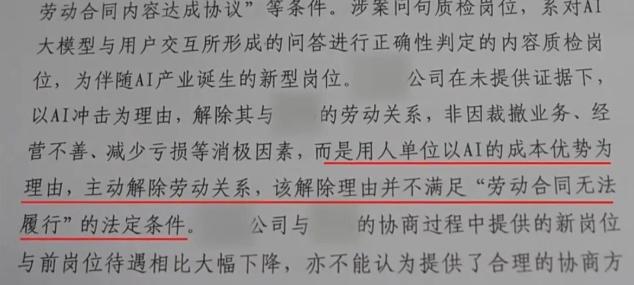
The court determined that the company’s actions constituted illegal termination of the labor contract. Judge Shi Guoqiang pointed out that simply citing cost reduction from AI implementation does not meet the legal standards for significant changes in objective circumstances that would render a labor contract unfulfillable. Current AI technology has not yet reached a level where it can substantively replace human jobs.
Re-entering the competitive internet industry is no easy task. Mr. Zhou revealed that since his contract was terminated in January last year, he has struggled to find suitable employment.
What rights of workers were violated in this incident? Will cases of AI replacing human jobs become more common? Lawyer Wu Hai analyzed that the company was shifting the burden of its operational costs and market risks onto workers, which does not comply with the legal conditions for contract termination. This violates both the law and the principle of fair employment, lacking legality and reasonableness. The court’s ruling has clearly defined the legal boundaries between technological innovation and worker rights protection, establishing an important benchmark for managing labor in new business models.
As technology continues to evolve, the replacement of basic and repetitive jobs by AI is becoming inevitable, and situations where labor contracts are not renewed will gradually increase. In the face of new industry transformations, workers cannot passively accept these changes. They must actively adapt to the evolving landscape, abandon outdated work mindsets, continuously enhance their professional skills, and develop capabilities that AI cannot easily replicate, such as innovation, decision-making, and comprehensive management.
The impact of AI is no longer just a challenge for individual companies or jobs; it is a societal issue that must be addressed.
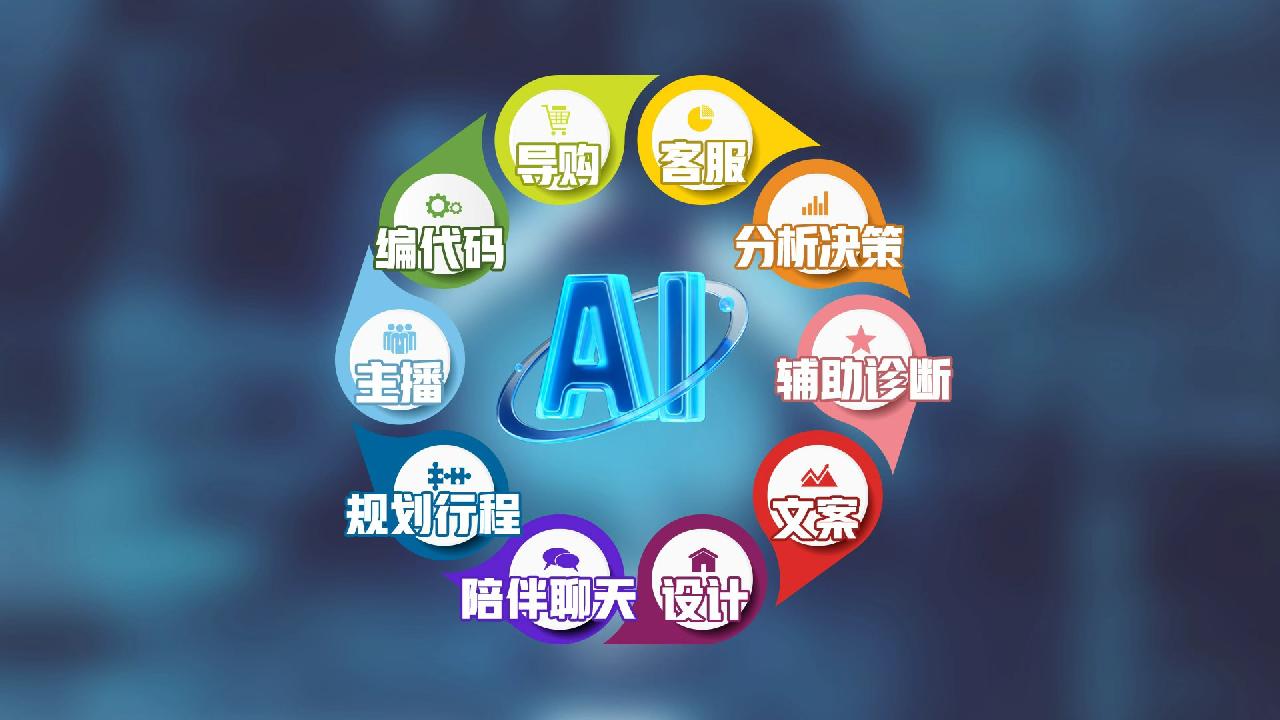
Currently, AI applications for writing, design, and coding are becoming commonplace. According to Zhaopin, over 10% of workers reported that their companies have “digital employees,” with nearly half in roles related to external services and marketing, and some even supporting data analysis and strategic decision-making.
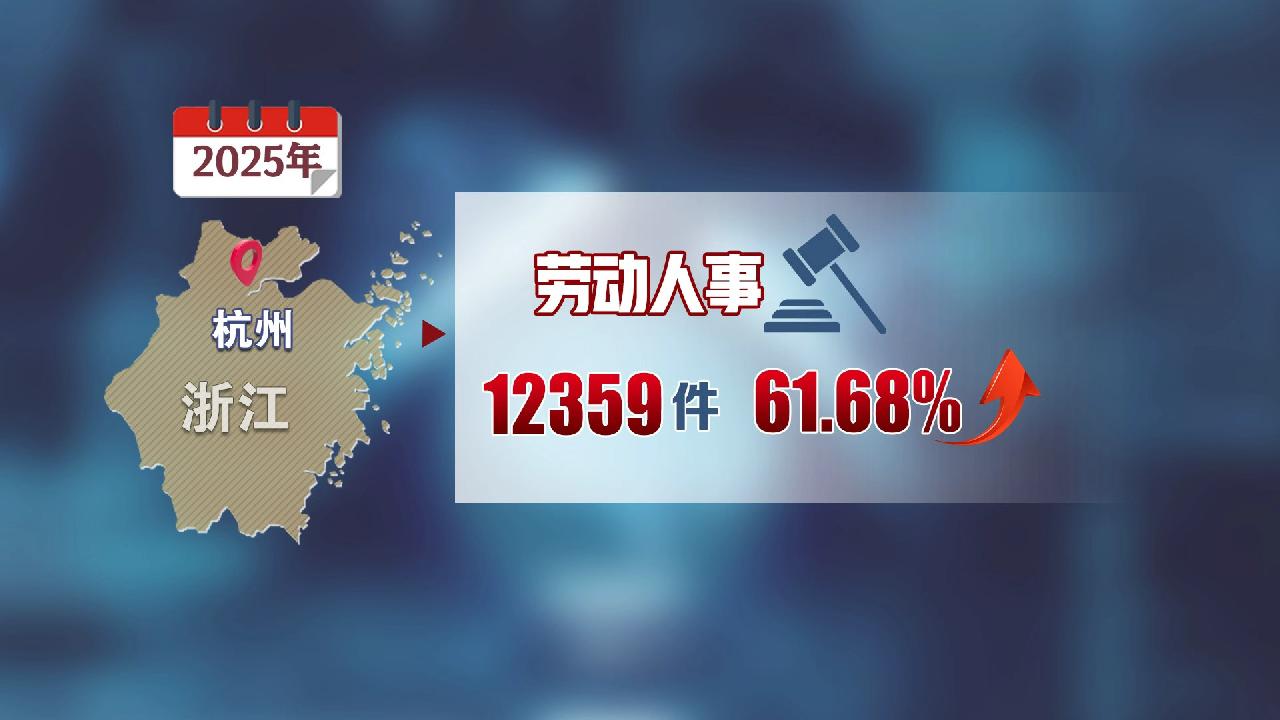
The latest white paper from the Hangzhou Intermediate People’s Court shows that in the city where AI development is most active, over 12,000 labor dispute cases were filed last year, a year-on-year increase of over 61%, with disputes related to AI and big data gradually rising.
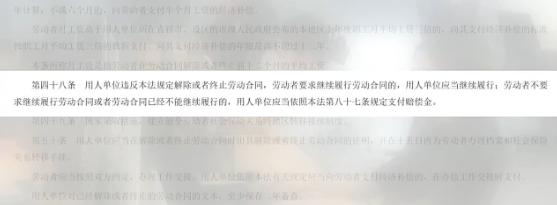
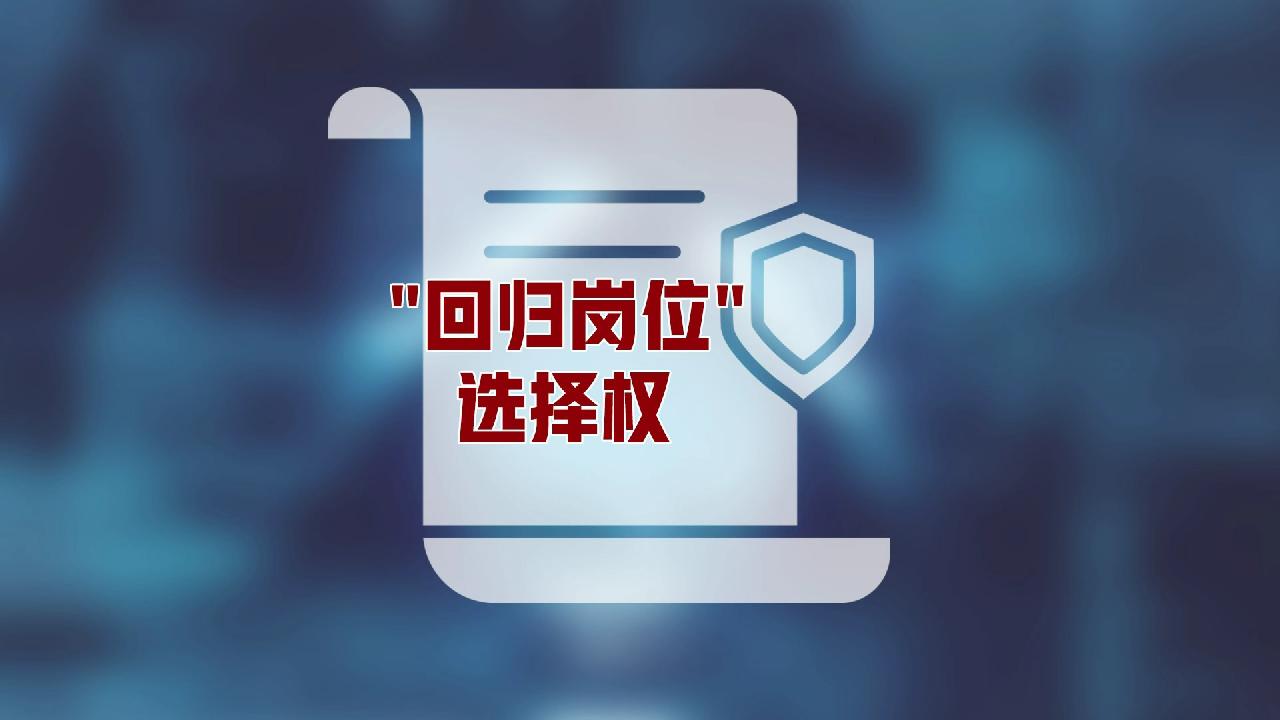
Article 48 of the Labor Contract Law states that if an employer illegally terminates a labor contract and the worker requests to continue the contract, the employer must comply. This means that the law grants workers the right to return to their positions when faced with unfair treatment.
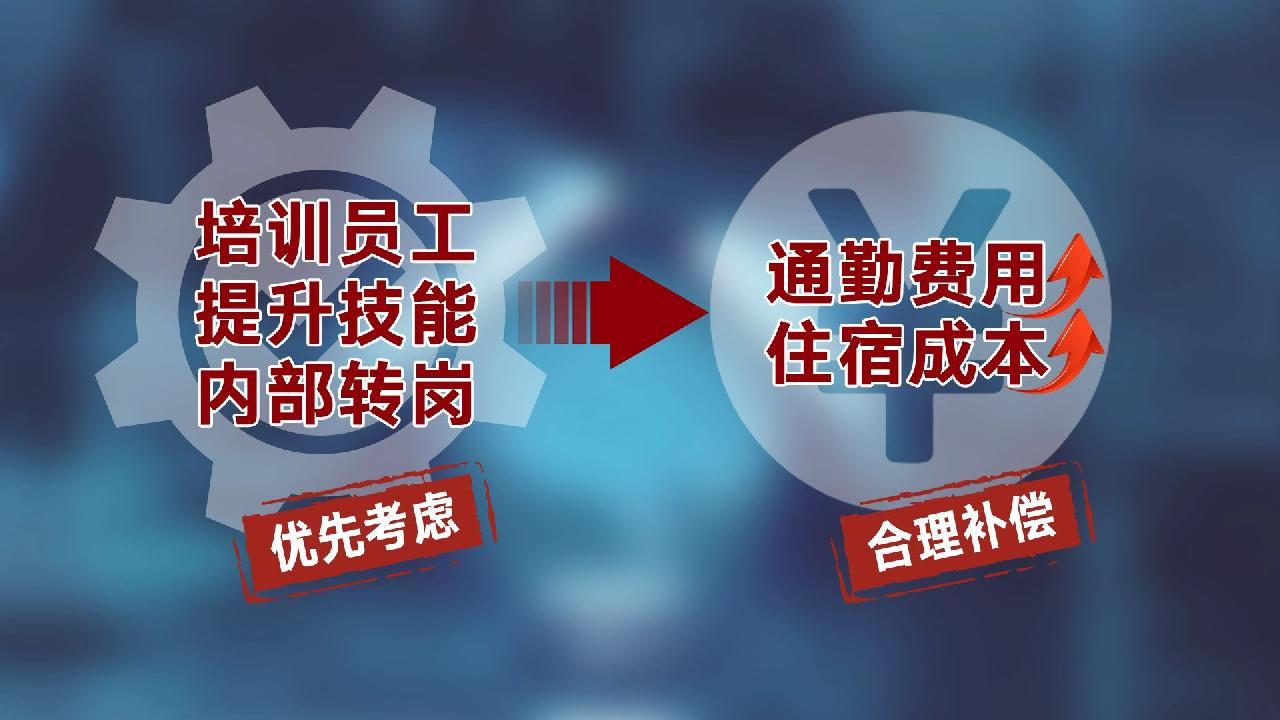
In this AI replacement case, the Hangzhou Intermediate People’s Court provided a positive directive: if a company needs to adjust positions, it should prioritize training employees, enhancing skills, and internal transfers rather than terminating contracts outright. Reasonable compensation should also be provided for increased commuting and housing costs due to job changes.
Earlier this year, the Ministry of Human Resources and Social Security announced plans to accelerate the establishment of a monitoring and early warning system for the employment impacts of AI. The 14th Five-Year Plan also proposed comprehensive measures to address the employment effects of external environmental changes and the development of new technologies like AI.
The rise of digital employees, while enhancing productivity, will indeed affect job structures. In December last year, the Beijing Human Resources Bureau released a typical case where Liu, who had worked for years in traditional manual data collection, had his position eliminated as the company transitioned to AI-driven automated data collection. The labor arbitration committee ruled that the company’s justification for termination was essentially shifting the normal risks of technological iteration onto the worker, deeming the company’s actions illegal.
Regardless of how AI evolves, the law must uphold the boundaries of worker rights. How can we balance technological advancement with the protection of workers’ rights? From a top-level design perspective, what reasonable suggestions can be made? Lawyer Wu Hai emphasized the need for comprehensive planning during top-level design. Labor regulations should be detailed to clarify the standards for recognizing significant changes in objective circumstances when jobs are replaced by AI, and to delineate the responsibilities of companies in the context of technological upgrades. Policy measures should also mandate companies to fulfill obligations for retraining, democratic consultation, and reasonable compensation before layoffs.
Particularly, layoffs solely due to AI replacement should be eliminated. A robust vocational skills training safety net should be established to ensure that while technology empowers and industries upgrade, the baseline of employment and livelihoods is also protected. Learning from the experiences and lessons of industrial era transformations is essential to achieve a win-win situation between technological progress and the protection of workers’ rights.
Comments
Discussion is powered by Giscus (GitHub Discussions). Add
repo,repoID,category, andcategoryIDunder[params.comments.giscus]inhugo.tomlusing the values from the Giscus setup tool.